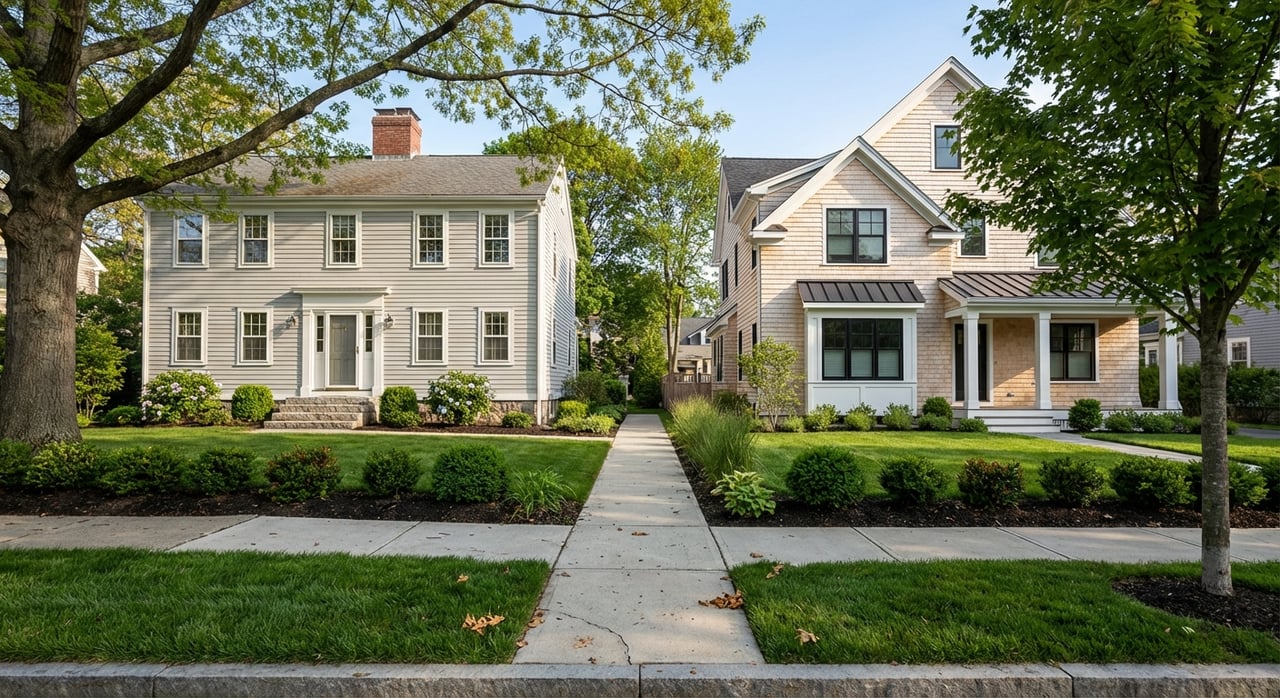
Torn between a crisp new build and a classic Colonial in Needham? You are not alone. In a high-demand suburb with limited inventory, choosing between new construction and an older home comes down to lifestyle, timing, and total cost of ownership. This guide walks you through layout, energy, maintenance, permits, and location to help you decide with confidence. Let’s dive in.
Needham market context, at a glance
Needham is an upper-tier Boston suburb with steady buyer demand and relatively low inventory. New construction often sells at a premium, reflecting modern layouts and systems. Older homes offer established streetscapes and character that many buyers love. Your best choice depends on how you value turnkey convenience versus customization and charm.
Layout and flow: how you live day to day
What new builds prioritize
Most recent builds favor open main floors, a kitchen that connects to family space, large islands, and flexible rooms that double as offices or guest suites. These features mirror buyer preferences tracked in NAHB’s “What Home Buyers Really Want,” including storage, laundry placement, and modern kitchens. See how these priorities show up in current design trends through the summary of buyer preferences in this NAHB overview.
What older homes offer
Many older Needham homes lean traditional: defined living and dining rooms, smaller original kitchens, and period details like built-ins and fireplaces. The character is real, but opening walls or relocating kitchens may require structural work and permits. Ask how the current layout supports remote work, aging in place, or multigenerational living before you plan a major reconfiguration.
Energy and systems: comfort, efficiency, and savings
New construction advantages
Newer homes typically meet or exceed current energy codes, with better insulation, efficient windows, smart controls, and modern HVAC. In Massachusetts, cold-climate heat pumps are increasingly common for year-round comfort. Trends in green building point to tighter envelopes, right-sized systems, and EV-ready electrical capacity, as highlighted by NAHB’s green building update.
Upgrading older homes
Older houses can reach similar performance with air sealing, insulation, window upgrades, and mechanical retrofits. The local Mass Save program offers rebates and financing that can shift the math in your favor. Explore current heat pump incentives and 0% HEAT Loan options through Mass Save’s heat pump page and confirm eligibility before you bid or plan work.
Maintenance and inspection: know the risks
New build watchouts
New homes often bring lower short-term maintenance. Even so, you should review punch lists, warranty coverage, and completion status for exterior work. Confirm that permits were closed and a certificate of occupancy was issued by the town.
Older home priorities
Expect more routine and deferred-maintenance questions on roofs, siding, chimneys, wiring, plumbing, and foundations. For homes built before 1978, review lead-based paint disclosures and safe work practices using HUD’s lead guidance. Many pre- and mid-20th-century homes may include materials with asbestos; Needham requires asbestos reporting for demolition, so check the town’s permit and demolition FAQs. Electrical systems also deserve attention. Legacy wiring and undersized panels can present safety or insurance concerns, and electrical issues figure prominently in home fire data, as summarized in this national fire analysis. If plumbing includes older galvanized pipes or lead-soldered copper, discuss water testing and review EPA resources on lead in drinking water.
Character and resale: charm vs. turnkey
Why older homes endure
Period millwork, hardwood floors, built-ins, and mature landscaping add texture and warmth that many buyers value. In established neighborhoods, these features can support long-term appeal. The trade-off is potential complexity if you plan additions or wall removals, which may be limited by zoning or structure.
Why new builds appeal
Predictable finishes, modern kitchens and baths, and standardized warranties reduce surprises. Many buyers also prize amenities like pantries, first-floor flex rooms, and organized mudrooms that builders now include by default. If you want a blank slate and a clear maintenance roadmap, a new build delivers it.
Location and commute: mapping your lifestyle
Needham offers MBTA commuter rail service with stations at Needham Heights, Needham Center, and Needham Junction, and quick access to I-95/Route 128. For an overview of MBTA accessibility and context, review this MBTA access resource. Within town, you can choose between walkable areas near shops and dining, larger lots on quieter streets, or locations that prioritize easy rail access. Decide if you want to be close to the train, parks, town center, or major routes before you set your tour list.
Permits, ADUs, and local rules
If you plan a teardown or major renovation, budget time and cost for local permits. Needham requires steps such as rodent and asbestos inspections for demolition. Start with the town’s permit and demolition FAQs to understand process and paperwork. If you are considering a secondary unit for a caregiver or rental, follow local Accessory Dwelling Unit bylaw updates and discussions, such as this overview from Green Needham, and verify current rules with the town.
Costs: price today vs. costs tomorrow
- Purchase price: New construction often commands a premium in Needham. Older homes may list lower, but plan for renovations and system updates if you want modern function.
- Operating costs: Newer homes with high-efficiency HVAC and tight envelopes can lower monthly bills. Upgrading an older home can get you close, especially with Mass Save heat pump incentives and 0% financing for eligible projects.
- Maintenance: Factor potential near-term projects in older homes like roof replacement, electrical panel upgrades, or insulation. For new builds, review warranty items and any unfinished exterior work.
A simple path is to compare three lines for each property you like: likely purchase price, immediate renovation or completion costs, and estimated annual energy and maintenance. Ask your inspector and contractors for written estimates before finalizing your offer strategy.
Which is right for you?
Choose new construction if you want modern flow, high efficiency from day one, and fewer early projects. Choose an older home if you value architectural character, mature landscaping, and a chance to customize over time. If you are on the fence, target well-renovated homes that blend classic curb appeal with updated systems. Your decision should reflect how you live now, what projects you are willing to take on, and how long you plan to stay.
Showing checklists to use this weekend
For older homes
- Ask the year built and request records for any permitted renovations or additions. Review the town’s process via the Needham FAQ page.
- Confirm lead paint disclosures for pre-1978 homes and discuss safe renovation practices using HUD guidance.
- Ask about asbestos surveys if you plan major work; demolition requires asbestos reporting in Needham.
- Have an electrician assess panel capacity and look for legacy wiring. Use the national fire data summary as reasoning for a thorough check.
- Identify visible pipe materials and consider water testing if older materials are present, referencing EPA resources.
- Evaluate roof age, drainage, grading, and evidence of past water issues.
For new construction or recently built homes
- Request builder warranty details, punch lists, and completion status for exterior items.
- Ask about HVAC type, insulation levels, window specs, and air-sealing tests. Check whether any utility rebates were used or remain available through Mass Save.
- Confirm permits, passed inspections, and a certificate of occupancy with the town. See the Needham FAQ page for local process context.
- Clarify responsibility and timeline for landscaping, hardscaping, and driveway finishes.
Universal questions
- Request 12 months of utility bills and a log of recent maintenance and repairs.
- Verify zoning, setbacks, and lot coverage before planning additions. Confirm whether the home is on municipal sewer or private septic with town departments.
Ready to see how this plays out for your budget and timeline? Let’s match properties to your must-haves and run a quick total-cost comparison. Reach out to Elissa Rosenfelt for a focused tour plan and local guidance from offer to closing.
FAQs
What are the main differences between new construction and older homes in Needham?
- New builds offer modern layouts, efficient systems, and fewer early projects, while older homes trade some updates for character, mature lots, and established streetscapes.
How do Mass Save rebates impact upgrading an older Needham home?
- Rebates and 0% HEAT Loans can reduce upfront costs for heat pumps and weatherization, which narrows the operating-cost gap between older and newer homes.
Which inspections are most important for older Needham properties?
- Prioritize electrical, plumbing, and building-envelope evaluations, plus lead paint checks for pre-1978 homes and asbestos reviews before major work.
What should I verify on a brand-new or recently built home?
- Confirm builder warranties, punch-list completion, permit sign-offs, and final inspections, and review HVAC specs and any applied or available utility incentives.
How does commute access vary within Needham?
- Many areas are a short drive to I-95/128, and several neighborhoods sit near MBTA commuter rail stations, so weigh proximity to stations and routes that fit your routine.