Snow, salt, and slush are part of everyday life in Needham and Greater Boston. If you’re tired of wet boots, gritty floors, and pet paw prints sneaking into your home, you’re not alone. A well-designed mudroom keeps the mess contained and daily routines smooth. In this guide, you’ll learn the must-have mudroom features buyers love in New England, plus simple seller upgrades that show beautifully and feel practical all year. Let’s dive in.
Why a winter-ready mudroom matters
Needham winters bring snow, ice, freeze–thaw cycles, and road salt. Entry zones have to handle moisture, grit, and repeat traffic without showing wear. A durable, organized mudroom protects the rest of your home and reduces maintenance.
Buyers in cold-climate suburbs often look for functional storage, tough finishes, and logical layouts that make family life easier. When your mudroom manages clutter and wet gear, it signals practical livability and low upkeep. That perceived usefulness can strengthen your listing’s appeal without needing luxury-only upgrades.
Best flooring and moisture control
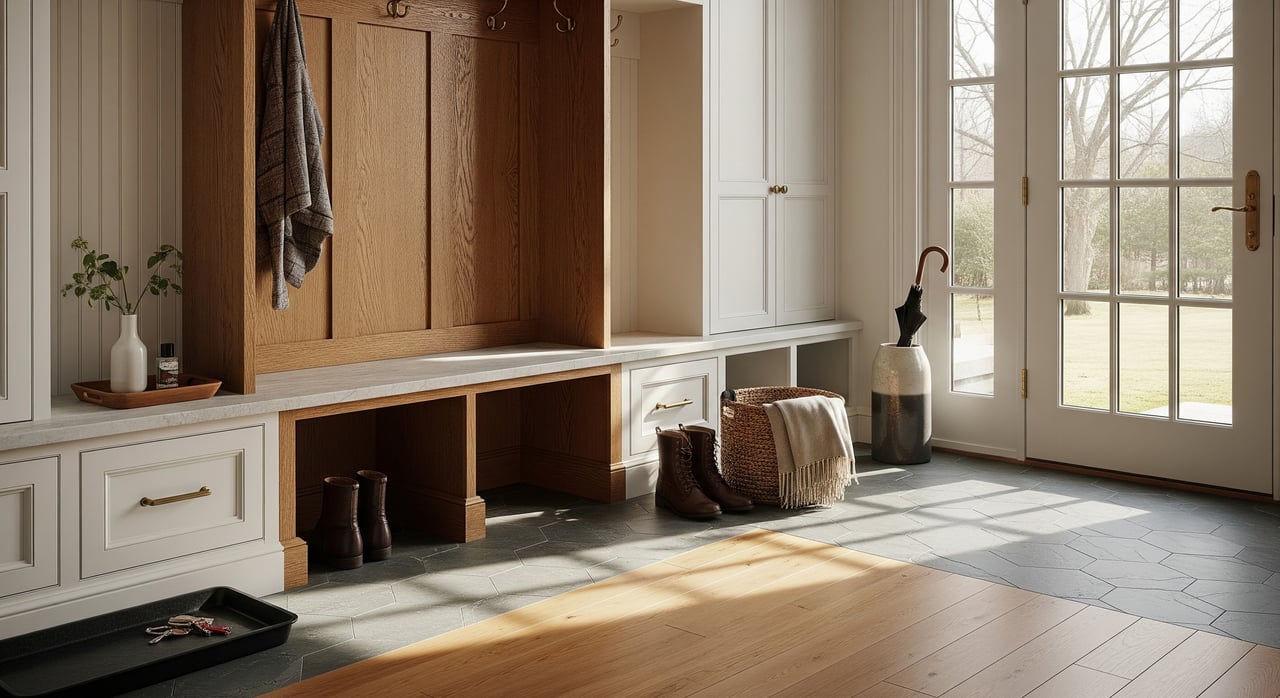
Flooring is the workhorse of a New England mudroom. Choose surfaces that are water-resistant, slip-resistant, and easy to clean.
- Porcelain or ceramic tile: Frost-resistant porcelain is a top pick. Opt for a textured finish for traction and seal grout to resist stains.
- Luxury vinyl plank or tile: Waterproof-core vinyl with a commercial-grade wear layer offers warmth and resilience under heavy use.
- Sealed or polished concrete: Long-lasting and simple to clean. Add a slip-resistant finish and proper sealing.
- Rubber tile: A smart option for pet-heavy homes or spaces with wash stations.
If you plan a pet-wash or heavy-duty wet zone, a slight floor slope or drain helps manage water. Retrofitting a drain can be a bigger project, so weigh it against your goals. At exterior doors, use durable thresholds and sill pans. Always select finishes with good traction when wet.
Built-ins and storage that work
Great mudrooms keep everything in its place. Built-ins and simple systems turn daily drop-offs into an easy routine.
- Bench seating: Aim for a comfortable 17–19-inch height. A 15–20-inch depth works well for circulation and comfort.
- Lockers and cubbies: Full-height storage for coats, backpacks, and sports gear keeps the space tidy.
- Closed cabinetry: Hide off-season items and reduce visual clutter.
- Open hooks: Sturdy, well-spaced hooks handle bulky winter layers.
- Shoe solutions: Slatted shelves, ventilated bins, or pull-out trays help wet footwear dry faster.
Use durable finishes like painted or stained wood, water-resistant MDF in low-splash areas, or PVC-based trim near entry doors to handle moisture.
Family zones that simplify life
Design your layout around how your household actually moves. Give each person a dedicated locker or cubby. Place lower hooks and bins where kids can reach them, and keep adult gear higher.
Add a small drop zone for keys, sunglasses, and mail to prevent clutter from migrating into the kitchen. For seasonal or bulky items, include a tall space for skis, long boots, or umbrellas. Visible cubbies and labeled baskets make organization clear to everyone who uses the space.
Pet-friendly stations buyers notice
Pet features are a big plus in suburban markets. If you have the space and plumbing access, a raised pet-wash station with a handheld sprayer and a tiled backsplash is both practical and eye-catching. If a wash station isn’t in scope, consider:
- A built-in feeding drawer or recessed bowls with an easy-to-clean pull-out tray
- Leash and towel hooks near the door
- Storage for food, treats, and grooming supplies
Focus on antimicrobial, waterproof surfaces and washable mats to keep pet areas fresh.
Power, lighting, and comfort
A little planning goes a long way for daily convenience.
- Outlets and charging: Place GFCI-protected outlets near counters or cubbies. Add one or two USB-equipped outlets and a recessed charging nook with cable management.
- Lighting layers: Combine overhead LED fixtures with task lighting inside lockers or over a bench for dark winter afternoons. Warm color temperatures make the space inviting.
- Heating and insulation: Baseboard or forced-air heat keeps the area comfortable. Electric radiant heat under tile is a nice upgrade. Make sure exterior walls and doors are well insulated to minimize drafts.
Ventilation and materials
Good airflow helps control moisture and odors. If your mudroom connects to laundry, consider an exhaust fan or dehumidifier to keep humidity in check. Use mold- and mildew-resistant paint and moisture-tolerant cabinet materials in splash zones.
Quick seller upgrades that impress
If you’re getting ready to list, focus on upgrades that show function, brightness, and easy upkeep.
Low-cost, high-impact
- Fresh neutral paint on walls, trim, and cabinets
- New hardware and sturdy hooks for coats and bags
- A removable, neutral bench cushion and neatly labeled baskets
- Brighter LED fixtures for crisp photos
- A washable runner or boot tray to capture water and grit
Moderate investment
- A built-in bench with open cubbies or drawers (prefab or basic carpentry)
- New water-resistant LVP or porcelain tile to replace tired flooring
- A small charging cubby with one or two USB outlets
- A single-wall coat system with shelf and hooks if full cabinetry isn’t feasible
Bigger projects with staying power
- Custom millwork with closed cabinetry and integrated bench storage
- A pet wash station or laundry hookups where practical
- A new, weather-tight entry door with a durable threshold
There isn’t a one-size-fits-all ROI for mudroom projects. In family-focused suburbs like Needham, functional improvements typically boost buyer perception. Before you invest, review local comps and ask your listing agent which features your price band expects.
Local steps: permits and pros
Some cosmetic work doesn’t require permits, but plumbing, electrical, or structural changes usually do. Always verify requirements with the Town of Needham or your local building department before starting. Proper permits and inspections matter, and skipping them can complicate a sale.
You may need a carpenter or millworker for built-ins, a tile or flooring contractor for new surfaces, a plumber for drains or a pet-wash, and an electrician for outlets and lighting. If coordinating multiple trades feels overwhelming, a general contractor can manage scheduling.
When vetting contractors, request proof of insurance, confirm licenses when applicable, and ask for recent local references. Get a written scope, timeline, and change-order policy, and obtain multiple bids to compare materials and warranties, not just price. Keep in mind that winter schedules and deliveries can affect timing, especially for exterior thresholds and door work.
Staging and showing tips
A clean, organized mudroom photographs well and makes a strong first impression during showings.
- Declutter: Limit the number of visible shoes and coats. Store extra pet supplies out of sight.
- Show function: Display one pair of boots, a neatly hung coat, and a small seasonal prop.
- Deep clean: Refresh grout lines, wipe cabinets and hardware, and launder mats and cushions.
- Light it right: Use bright bulbs and maximize natural light to eliminate shadows.
- Keep it fresh: Neutralize pet odors and replace damp mats between showings.
For listing copy, highlight practical features that solve real problems, such as “built-in bench and cubbies, waterproof flooring, dedicated charging hub, and pet wash station.” Photograph angles that show storage capacity and durable finishes.
Plan your next step
Whether you’re buying in Norfolk County or prepping a Needham home to sell, a weather-ready mudroom is a smart, high-perception feature. If you want guidance on where to invest, who to hire, and how to present the space for maximum impact, reach out. With one-on-one advice, vendor coordination, and access to team resources, you can create a mudroom that looks great online and lives even better in person. Connect with Elissa Rosenfelt to map your plan.
FAQs
Are mudrooms worth adding before selling in Needham?
- Often yes in family-focused suburbs; prioritize visible, low-disruption upgrades like a bench, hooks, brighter lighting, and refreshed flooring or mats.
What flooring holds up best to snow and salt?
- Porcelain tile or waterproof, commercial-grade LVP are strong choices; pick slip-resistant textures and seal grout where applicable.
Do I need a permit for mudroom changes?
- Cosmetic work typically doesn’t, but new plumbing, electrical, or structural changes usually do—always verify with the local building department.
How much storage should a mudroom have?
- Aim for at least one locker or cubby per family member plus shared shoe storage; adjustable shelves help the space evolve over time.
Should I include laundry in the mudroom?
- Laundry adjacency is highly practical; adding hookups is a moderate-to-major project, so consider proximity to existing plumbing.